
Welcome to a new mini issue: Betwixt! The Betwixt concept centers around 2 ideas: Curing a reading hangover induced by a longer read (upwards of 500 pages) and experimenting with a genre/author with limited bookshelf real estate within my stacks. Betwixt offers a reset for my brain working overtime on focusing deeply on a work of either non-fiction or fiction and engaging both a writer’s craft and technique.
This issue of Betwixt features author, Sabina Murray, Filipina-American novelist, screenwriter and professor at U Mass, Amherst. Murray has authored 6 novels and 1 screenplay and Murray’s featured work, Muckross Abbey offers readers 10 quietly creepy tales with one of the short stories as a twisted spin on Daphne du Maurier’s, Rebecca. Enjoy!
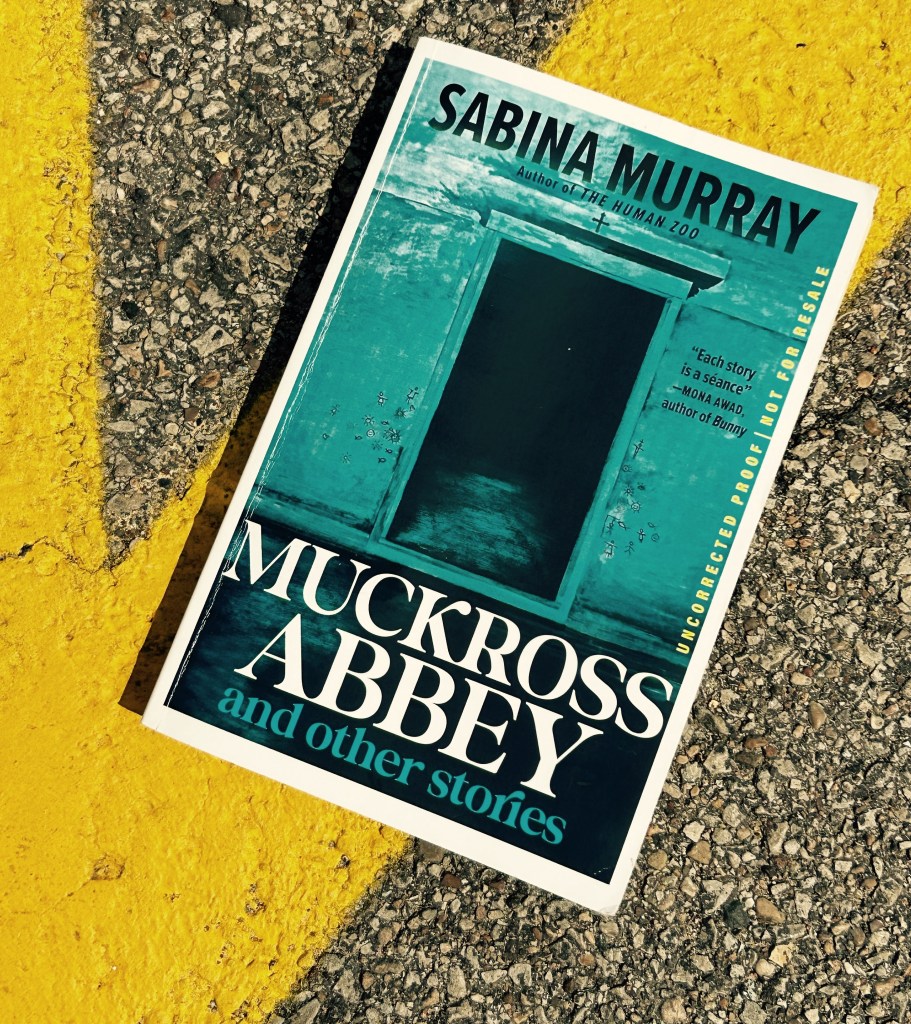
When I close my eyes to envision what a Gothic text, movie or piece of music might read, look or sound like, I kind of end up in a weird place. In this place The Cure might be playing and characters might be garbed in witch/warlock-like clothing as they linger in liminal echoing spaces and there might even be some form of blood consumption canniabalism. In Gothic fiction some of this is true but not nearly all—especially The Cure part…
The word Gothic makes me envision black and white vampire movies from the 1940s in Romania and maybe a little Bride of Frankenstein However, Gothic fiction has a genre and regional spectrum of its own and I have unknowingly read quite a few with no genre selective intention and these Gothic works always leave a lasting impression.
For those of you looking for familiar names a shortlist of Gothic writers includes: Mary Shelley, Edgar Alan Poe, Bram Stoker, Stephen King, Shirley Jackson, Nathaniel Hawthorne, Washington Irving, Silvia Moreno Garcia, Anne Rice, and for this issue of Bookisshh, Sabina Murray.
Murray is a master of the tense, sad and echoing history that permeates liminal spaces either abandoned or infrequently visited by tourists and locals. Fog, darkness, shadows, mists, changing temperatures set your mind a spin as you read your way into bogs, moors, abbeys, empty homes and experience the lingering heaviness of loss of a child, the violation of nuns who’ve entrusted their lives to their god and servitude or wives consumed as fine wines before their time. Basically the only good things that happens in these kinds of spaces are survival and perhaps witnessing an entrapped spirit and the endless loop of their terminating cause and conflict be released.
Yet there is a sort of beauty to these kinds of amorphous spaces that enable characters and readers to project their deepest fears and pain onto the mist that dissipates with movement and sunshine.. Though it’s curiosity and story structure training that keeps readers seeking answers and conclusions and sometimes one just doesn’t get them.
I appreciate the elegant dialogue exchanged by unhappy artistic and/or academic couples. The dialogue is analytical, thoughtful, expansive, and borders heavily toward aspirational outside the Gothic collection. Regardless, it’s beautiful and evokes imagery and sensation that gives a reader that escapism or cleanse that turns the cognitive key so to speak.
Keeping it relevant, Murray seeds her short story collection with unbalanced power dynamics between older husbands and younger women plucked by nefarious bachelors seeking innocence and youth in their marital captives. These very same women learn the unfortunate lesson that likely they would have selected a different mate but might not live long enough to be able to.. Male characters struggle with traditional male tropes—widowed millionaire, failed professor, cheating artist, frustrated playwright, absent professional fathers.
Be hopeful dear reader, Murray does people her tales with men who break trope molds but they exist within the periphery. Women are equally raw and unlovely as they border on mad, depressed, child-free, cold mothers, bratty bullying girls etc. The women sort of linger between ball and chain trophy wives or madwomen in the attic fading with the years.
Motherless children are raised by religious surrogates or spirits and families exist quietly with the ghosts of their deceased children (too morbid for me). When families don’t linger in sadness they send their children to boarding schools and these stories are highly compartmentalized both physically and psychologically and readers like the parents who’ve sent their kids away never really gain the whole truth.
Books get thrown out the window for me if there is harm to children and animals. While I’m not one for trigger warnings this collection is making me re-think this though I’m not final because working through the highly charged fear based cognitive fences does ignite resilience which is something this highly charged world we live in beyond the pages asks us to do so.
The small turnoffs—tropes, power dynamics, harms to the innocent made me decide to look at Murray’s writing at the sentence, historic and visual levels. The fear she injects also definitely cured my reading hangover from the prior book. Individually the stories are interesting but there’s no thread that weaves the collection together and I might have enjoyed this book more if there was.
Will I seek her other book, The Human Zoo? Maybe. I expect Muckross Abbey to be a Night Gallery or Twilight Zone if it’s adapted which it might be given the length of the writer’s strike passing 100 days. Cooler months are coming and new streaming entertainment is being suffocated by ridiculous reality tv. If you’re looking to be a little scared and educated on great artists, writers and philosophers, give Muckross Abbey (a real place BTW) a page turn. Enjoy!
 Bookisshh