
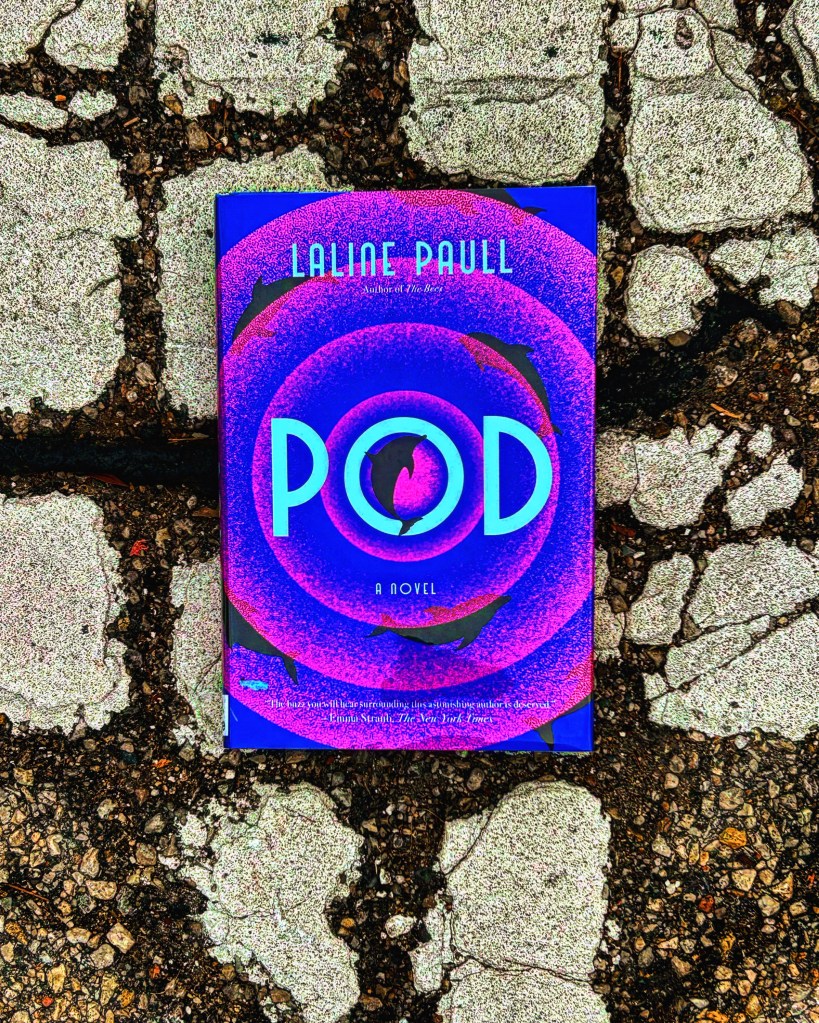
3rd up for The Women’s Prize 2023 shortlist dispute! I am now through 3 out of the 6 shortlisted works by female authors who publish in English and in the UK. The more I read the Women’s Prize shortlist, I realize that these authors and this prize are worthy of a wide acknowledgement and international reportage and recognition. It really is amazing that a group of female authors hailing from across the ocean are grouped together according to their craft, Fiction, and in so doing share their worldly concerns. Alas, let’s discuss, Pod by Laline Paull and let’s see if I agree with the 2023 Womens Prize judges panel that this book was not the winner. Read on and enjoy!
Please note, I will be using a 5 🖊️ system in lieu of ⭐️’s simply because this scale (🖊️’s) suits me better. I will also be giving partial 🖊️’s using increments of: .25 / .50 / .75 because pens come in pieces and stars don’t and partial 🖊️’s allow me to be granular instead of vague. Let’s get to it shall we?
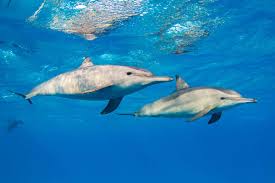
Originality is the likely place to begin discussing Pod and whether it should have been the 2023 Womens Prize Winner. After all, Pod made it to the shortlist which whittled down selections from 15 to 6… In terms of Originality, Pod by Laline Paull becomes original because the entire narrative occurs under water and employs a third person narrator which in this case is delivered through the multiple points of view of marine life creatures. Most of the story is experienced through EA, a Longi dolphin, who for painful reasons departs from or is self-exiled away from her mega pod of dolphins. Through EA and other sea creatures readers can experience predation, climate change, military experiment and species collapse. Some of the marine life characters include: a wrasse, a fogo fish, a remora, various tursiops dolphins, a humpback whale, pilot whales, clams, morays, manta rays, kelp, among other fish and mammals. During the narrative readers spend many a day with the marine life creatures eating, playing, hunting, resting, mating and declining.
Though the marine life characters are different species than humans they do the same things that humans do. Author, Paull personifies the sea creatures thoughts, feelings and innovations. For example, EA has self-awareness in that she knows she doesn’t want to mate during the spawning moon. EA’s mother knows that EA is different and accepts her. EA’s mother also teaches EA compensatory strategies that keep her within the pod by way of dance and leading the hunt—the pod cannot function without EA and her mother. EA reminds the pod members of their gifts and carries their humiliations for them while she enhances her special talents and dreams privately. Humans may wish to take note from their mammal counterparts. Personification is used in a varied way with other characters as well like Google and military trained dolphin who could find his true love, experience loyalty, ancestral memory, ethics and the instinct to protect both his true love and species kin. The use of personification is original and speaks to a greater purpose—endangered species and human roles in collapse and ecosystem alteration.
However, Paull was a little too original in her use of sexual violence among marine life species. Too much emphasis was described in granular detail when EA suffers repeated rapes by Megapod leaders and his underlings. Trauma porn does not deliver a message to me and so I look away and took frequent and longer breaks from reading Pod. Paull leaves her female characters as victims seeking redemption only to be victimized and hopeless again. It is a cycle without redemption with no purpose except an attempt to harden a reader to “nature’s way” which didn’t sit well with me. I do not romanticize the ocean and am fully aware of the dangers that lurk in its depths and don’t require trauma porn to do so. So for Originality I give 3.25 🖊️’s because I felt like I was either stuck in a shipwreck or floating endlessly in wait of an attack.
On Accessibility.. It’s the stark contrast between the marine and human life in this book that foster accessibility. The absence of all things human in terms of infrastructure and systems of rules to live by, made me startlingly aware of how marine life exists differently than humans and so the rules for ethics, governance, and even cultural interchange simply do not apply. The rape, territorial dominance, coveting and stealing resources etc. that happen within the ocean’s depths is a consequence of marine life even though witnessing this during reading made me angry because Paull humanizes her characters and I became concerned for them and so activated compassion. I was more uncomfortable than I prefer to be during reading. The result of the amount of trauma porn that this author imposes on a reader left this reader questioning the value of a marine life creature when most of it is violent or it’s constantly on the verge of extinction. Does Paull want her readers to value marine life existence more and so abandon the human enjoyed and endeavored systems of entertainment, transporting goods, and military defense and experiment? Does this leave humans as helpless and hopeless as their marine counterparts? A lot of questions but this book happened so far outside my realm without calling itself Fantasy (which I am not a fan of due to its excessive requirement for world-building) that I wouldn’t spend the time trying to discern my own answers. For Accessibility 2.5 🖊️’s. Pod did not hit the marks for me in this category.
As you plow through this blog post, you’re probably noticing that I enjoyed aspects of this book and struggled with world-building, forming mental pictures, and comprehension which are all things I enjoy about Literary Fiction. Nonetheless, let’s wrap up with a brief few thoughts on Excellence as it relates to Pod by Laline Paull. What makes Pod excellent is the type and amount of research that Paull has poured into her narrative. She read books, articles, streamed documentaries, engaged with experts and everything fits together in an orderly way. What makes Pod not excellent is how Paull loses a sense of her reader’s knowledge base and sense of ordering time and space while reading. Readers are left with core concern for main marine life characters, however, they come and go with such frequency that it’s hard to center, build upon and maintain readerly concern. This also created a sense of fatigue in me, but nonetheless I persisted.
Other detractors from Excellence include the disconnectedness between characters. While characters are part of a large and enduring ecosystem they don’t necessarily have relationships that readers may understand (with exception going to the remora who has a symbiotic relationship with dolphins and mantas). This book requires a lot of cognitive patience that I wonder if people have in today’s wider reading world and attention economy.
Lastly, on craft and Excellence. Paull writes like a composer and Pod is the musical score of a troubled ocean. There are musical moments that are dark and alluring, then they shift to violent rapidity and long drawn solos.. The author uses prose here that’s either lovely or painful—such is life I guess—and while it works in music or visuals, it does not work for me in printed words on a page that intermingle narrative and prose. When done with the book, I am left hopeless, soul crushed, empty and quietly insulted. 2.50 🖊️’s for Excellence. Added up, 2.75 🖊️’s overall.Pod simply wasn’t excellent for me, though I am curious about an earlier work of Paul’s, The Bees, to see how she handled a story within a more clearly structured natural environment. Keep your eyes peeled…
Pod by Laline Paull is not the winner of the 2023 Womens Prize and with the judges I agree. I sure wish I could be a fly on the wall during their debate. I still don’t agree with the actual winner, but I have 3 to go to see if I change my mind or discover the book I think should win. Click below to learn more about Laline Paull author of Pod. Enjoy!
 Bookisshh