
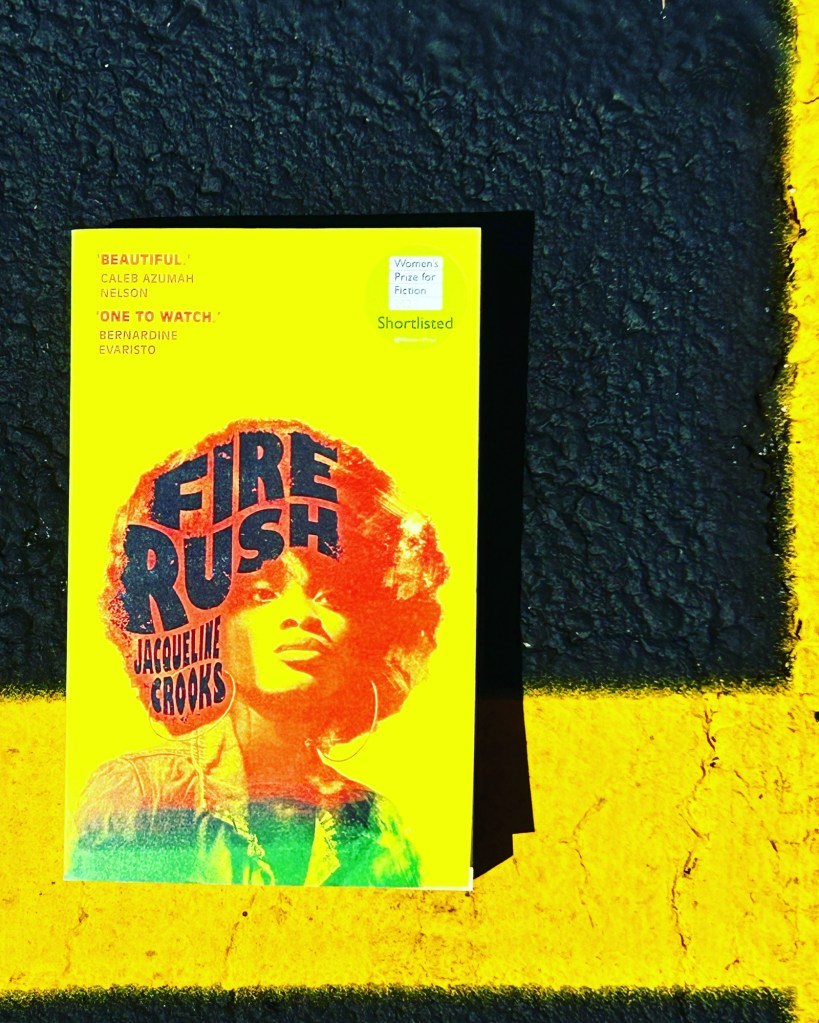
No matter how simplified The Women’s Prize’s criteria for judging a book, the more I read through the shortlist, the more difficult it becomes to identify a winner. As a reminder, the judges evaluate a book using three criteria: Originality, Accessibility and Excellence. Although it’s challenging for me to see a clear winner fellow readers, one is emerging..
Each book on the shortlist is entirely different then the one stacked above and/or below it. For the 2023 Women’s Prize shortlist, there was an historical fiction, a climate collapse fiction, a couple of works featuring women artists struggling with sociopolitical phenomena imposing on their safety and freedom. There was also a by-product/composite story of big pharma’s toxic impact on the poor and an homage to Dickens’s “David Copperfield,” and finally, a love story in which a woman is single and her male love interest is married and religious differences prevent them from ever being together legally and socially. When you look at these books next to each other, you too might be grateful for the judgement criteria’s simplicity..
Today’s post features, Fire Rush by Jacqueline Crooks. This is a tender and exciting story of a young woman’s reckoning with her origin story, family, and other truths that define her life. Fire Rush is also a story of Jamaican, diasporic people who have landed in London during the 1980s during a time when policing was high, Reggae music was exploding and social freedoms were low for all Island people living in the UK. One woman, Yamaye has lost her mother, her lover, her best friend and in doing so has discovered painful truths about her father. Yamaye runs away and is caged in by “Babylon” aka the police and becomes entombed by an underground community who stake reparations due to colonialism and enslavement by any means necessary. The thing about Yamaye is that she is an MC or a narrator and uses Reggae music to emancipate herself from the chains that imprison her in London. Almost free, Yamaye decides to return to Jamaica to reclaim herself and live freely on her own terms. Or does she?
Five pens 🖊️🖊️🖊️🖊️🖊️ all the way for Originality. Author, Crooks, breaks out all her unique writer’s tools as she tells Yamaye’s story and the story of those who went before her, fell alongside of her, and migrant people she knew nothing of at all. So what does Jacqueline Crooks use? At the sentence level readers can expect to find several regional dialects. There’s patois, a mash up of English and Creole French, West African and Portuguese both older and updated phrases. Crooks layers in bits and fragments of Reggae vibes and phrases that express the deeper subtext of both Yamaye’s story and the story of her people as s lives and breathes with them. In the musical lyrics there are signals for uprising, disruption, reparation, and firsthand historic truths as passed through this strand of the oral tradition. Readers are never bored reading Fire Rush because one needs to bend their ear as the voice and style changes at the sentence level, and sometimes this interferes with sustaining the story and impacting accessibility for this reader.
Furthermore on Originality—Crooks crafts startling contrasts in the different settings in which scenes unfold and these settings are deeply immersive and layered with time. Examples can be found in The Crypt which is in an old church deep in the basement where DJs spin, MCs narrate and people are packed together like sardines, sweating and grinding as they dance their troubles away. The Crypt is also smoke filled and a place where political agendas and black market economies thrive. Characters can leave The Crypt by way of a dark, dank tunnel where they can be accosted by moles and interlopers who work for the police aka Babylon or faction members from various gangs seeking to take over the local economy. Readers can enter old ship yards, sugar warehouses now museums and everywhere readers go they learn the story of Enslavement, Colonialism and the shadows cast as far as today. The urban settings are harsh, concrete, metal, stone, old Ebony wood and then the island, Jamaica, is teeming with life, flora, fauna, and readers can feel the sun on their skin, taste the coconut water and milk, get stung by a fierce bee, and ride around in a rickety topless vehicle from one shanty to another and let that urbanity melt off. But be careful reader because you could get burned.
Accessibility… This story was easy for me to access because I have genuine and interest in diaspora stories and how people from the islands and Africa fare in countries beyond their origin. I’m interested and concerned over the impact that colonialism and enslavement has had on generations past and present. I also like Reggae music and am thrilled when a woman breaks out and stands her mic. However, not all readers are passionate about diaspora stories and author, Crooks, doesn’t make it easier for them to stay engaged and keep the story organized in their reading head. At times I struggled with this too especially when Yamaye was entrapped in an underground community by a man who she thought was good, Monassa, who was very unkind indeed.
Further, narrative time moved forward but it moved all sorts of places before it actually did. Yamaye could be deciding to leave Bristol for Jamaica, but she kept losing herself in the worlds of those who held her back from this change. Then, BAM, all of the sudden Yamaye would make a big move. This also happened when Crooks would link the past to the present via things like ebony wood that was taken from Africa, worked on by African hands, and carried on ships with enslaved African people. So much is layered into one moment, it’s hard to remember the key event that just happened or is about to. The work felt more like a history lesson than a story at times, and I felt a little lost and sad for that and there were moments when I found myself counting pages wondering how much time it would take me to finish because I wanted more answers for Yamaye and redemption. Scoring for Accessibility, 4.0 pens🖊️🖊️🖊️🖊️.
I treat the last judgment criteria, Excellence, in two parts. Part one of Excellence demands from me to finish that last page and exclaim, “Now that was a great book!” This could happen because my understanding of someone else’s life, dilemma, survival strategies, relationships, etc. is expanded in new ways. And part two of, Excellence, take a look at how everything—the elements of literature: plot, characters, conflict, resolution or ending, narration, voice, tone, prose, mash ups of style or genres, interesting punctuation and language, come together and work together as a whole be it a cohesive or not if intentional.
Part two of Excellent puts everything back together as a whole. Here’s where some partial points fall off a star for me. These issues are small but matter in a freshman novel—things like continuity, point of view shifts, narrative shifts, regional dialects with more detailed contexts so readers can extrapolate as opposed to looking away from the story to the internet for more explanation. Lastly, on this part two of Excellence, characters sort of melt into each other too much for me. This happens when Yamaye’s lover Moose dies and she discovers Monassa and other men who have impacted her life. The same thing happens when Yamaye examines her female friendships that have stood in her way from her self discovery. I like how Crooks peoples up her story, but it would be more meaningful if she made clear why they’re present and how Yamaye benefits from those relationships. It’s pretty clear that Yamaye has a distorted experience of parents given the amount of family secrets she grew up with.
How feminism responds to patriarchy, enslavement, migrational prejudice, traditionalism, over time and space is EXCELLENT. Feminism is the life force throughout Fire Rush as a motherless daughter gets through childhood to early adulthood and finds out who she is artistically, professionally, sexually, ethnically and relaitonally. Somehow Crooks gets Yamaye to the mic, out of the house, up from underground, in the air and across the the ocean to Jamaica into Granny Itiba’s arms the very woman who is a Fire Rush and understands the dark properties that nature possesses in the face of mortality and in the story of Fire Rush is death. Let’s just say that Feminism, Black Feminism wins in this book and it is highly satisfying and therefore Excellent. All in all 4pens 🖊️🖊️🖊️🖊️ for Excellence.
When I put all three of the judging criteria together, Originality, Accessibility and Excellence, Fire Rush is top shelf for me. As a debut work, it sits right next to the 2023 Women’s Prize winner, Demon Copperhead by Barbara Kingsolver, but it doesn’t address the systemic and historic racism and sexism enough to knock Demon Copperhead off the shelf. Fire Rush can interrogate these things front on and full steam ahead because times have changed and conversations regarding reading Carribbean, reading Diasporic stories, and those of emancipated women are necessary and long overdue. Fire Rush is a winner and worthy of the long list and the short list, but for me not the winner overall. So onward I read—two more left and then I eat my hat and agree with the judges or press the revisionist winner into your hands. See you between the covers of, The Marriage Portrait” by Maggie O’Farrell next.
 Bookisshh