
Being human is oh so joyous and also a burden when a person find themselves in pain be it physical or emotional. Depending on how one might find oneself in these domains, how a person fares is contingent upon things like: culture, family rules/ permissions spoken and unspoken, faith, economics, geography, physical, psychological, emotional, and intellectual developmental traits. How we come to be who we are evolves as fast as the technology that we use to examine and optimize ourselves and explain our behaviors and ailments. One thing easily taken for granted is language and it’s descriptive capacity which plays a huge role in how humans fare due to the multitude of words nouns, verbs, adverbs and adjectives for humans to control and weather the chaos that is life, let alone work through the therapeutic process. In this issue of Bookisshh I’m dipping into a best-selling South Korean therapy memoir which reveals some therapy, some self-discovery and not so sure about healing, but there is growth which is central to the therapeutic process. Enjoy!
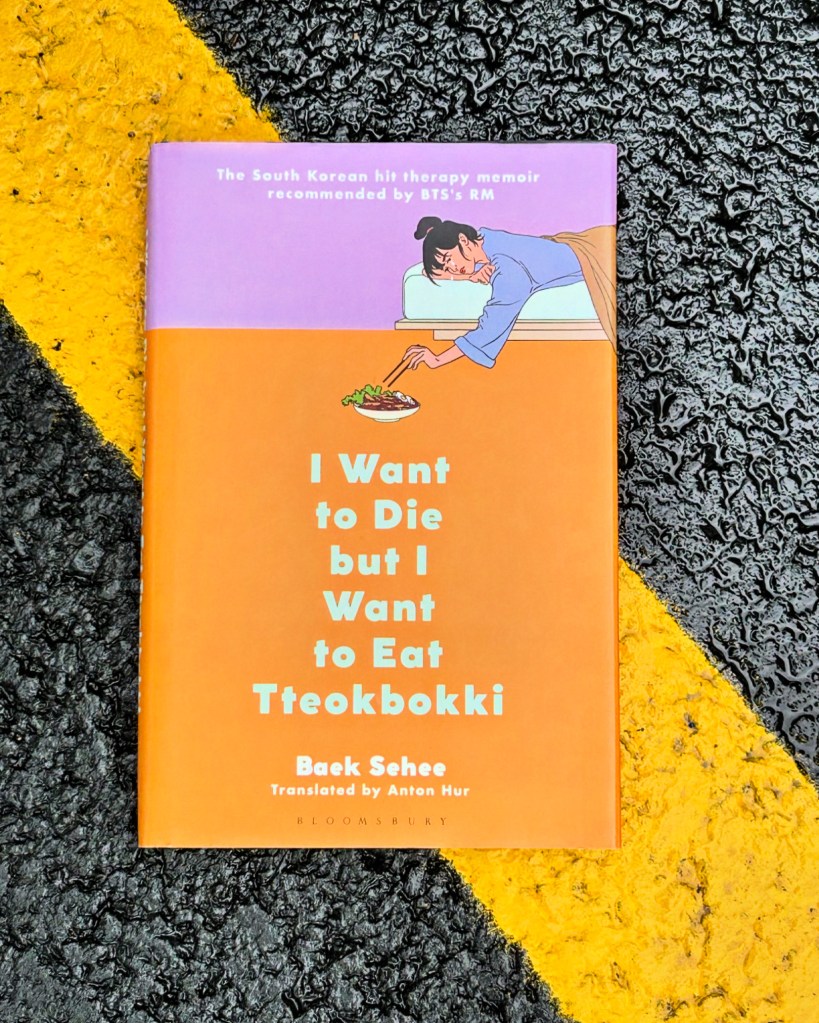
Scroll up and look at that cover. The cover of, I Want to Die but I Want to Eat Tteokbokki by Baek Sehee, really grabbed my attention and it took a long time before I bought it. Firstly, I thought it might be a food driven narrative and that it might be really interesting to see how therapy, food and South Korea might braid together. It wasn’t food-driven per se, but now I want to try Tteobokki ( Tteokbokki (pronounced duck-bo-key) is a popular, richly spiced street-food dish composed of rice cakes bathed in red chile paste.) Tteobokki is a comfort food and gets a little descriptive nod but really is a simple counter balance for Sehee’s acknowledgement of pleasure in response to emotional pain. The dish is something she can turn to when Sehee needs to feel nurtured. Tteobokki is a vehicle for Sehee to intersect the concept of healing with her experience of family, culture, geography, rules/permissions and gender constraints. Therapy and mental health resources are newer to this part of the globe and as with many things people are mistrustful of the process as it catches on which was a goal for Sehee in putting this memoir out into the world.
Issues I have…

I have ethical problems with how this memoir is compiled. With the consent of her therapist, Sehee recorded her sessions because she couldn’t remember what they talked about afterward. Sehee then created transcripts and used them in this book. She sandwiched her reflections about her sessions and how she might grow as a result of therapy. When a person is knowingly recorded, it’s highly possible that they become performative and leaning toward an ideal but not an authentic representation of self in a role. The therapist might be distracted by the recording and it may distort perceptions on behalf both client and therapist. In the post script the therapist notes their feelings regarding being recorded in retrospect. Other ethical concerns were the race to diagnosis and pharmaceutical solutions before going deeper into the client’s issuesrsec and causal factors. The medication treated symptoms and while doing so stimulated new problems. Therapy is a process and not a bunch of hurried conversations and there were many of these passing fancies. Sehee is well intending—she wants people to see themselves in her especially her countrymen. Therapy has a shorter tradition in South Korea and Sehee’s revelations encourage readers to face anxiety and depression and mental health struggles to gain value and support even in South Korea.

So, what did I like about, I Want to Die But I Want to Eat TTeokbokki? This memoir invites reticent therapy goers to therapy. Sehee uses good language to demonstrate therapeutic dialogue on behalf of both client and practitioner. Readers learn about Dysthymia, a persistent mild depressive disorder, and also gain an emotional vocabulary to describe and explain their feelings both emotional and physical. Readers also are exposed to medication, side effects and the trickster that addiction is. Readers also see how a client can exercise agency when therapy/pist arent meeting the mark and redirection is needed (very important). Finally, the book is fast-moving which really lends itself toward a younger person (16-20s) who may find themselves overwhelmed while in constant motion and with a frustrated or immature emotional IQ.
What I didn’t like is that Sehee focuses on the effect of emotional trauma and does not root or weed her emotional and psychological garden. In other words she doesn’t go DEEP enough but departs this thin narrative with the understanding that we all cant be in a state of constant blissful happiness no matter how one curates their social personae, and that’s OK. A worthy takeaway but for this reader not 5🖊️s. However, for that reticent therapy candidate this light, curious book is a sweet start for the therapeutic consideration (a backlisted used purchase is recommended and many are available). Enjoy and try some Tteokbokki its delicious!
 Bookisshh