
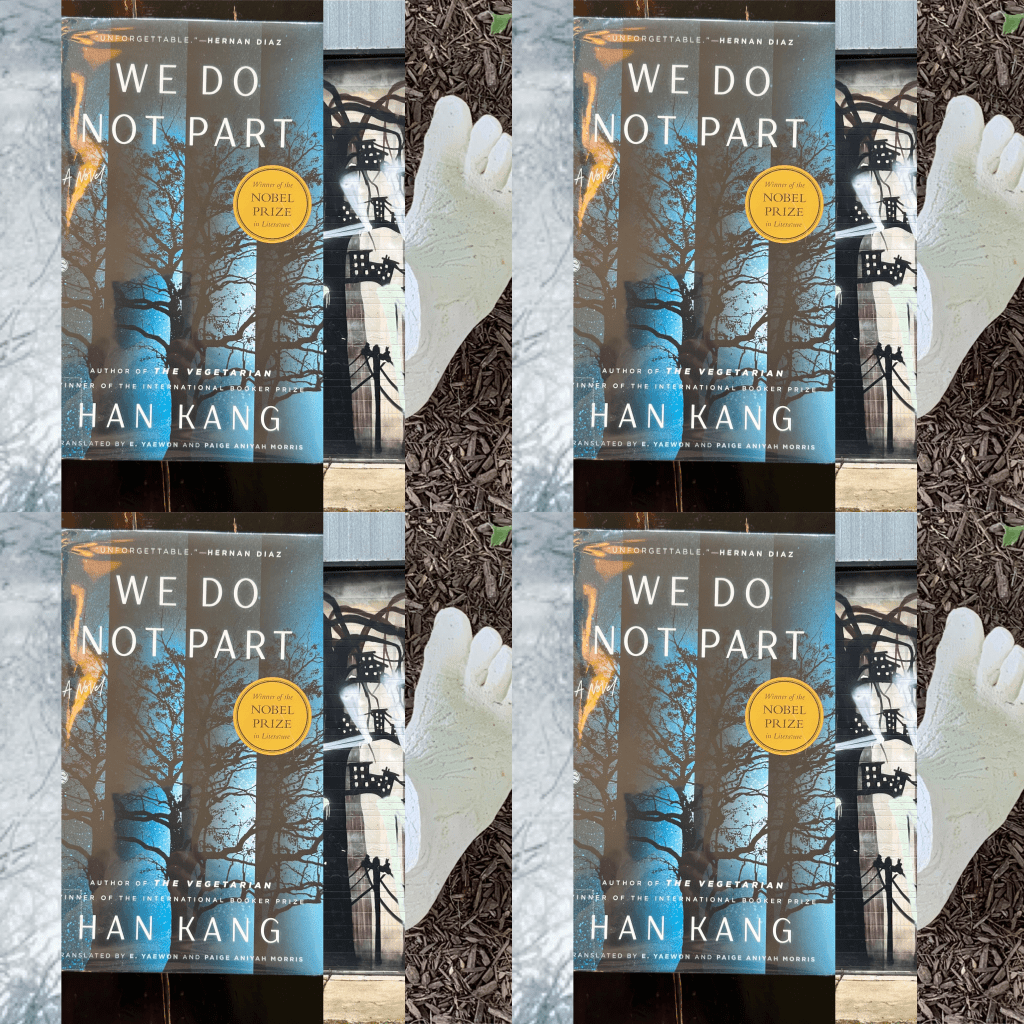
What happens when you go on a reading quest and encounter an author who pieces together tragic history, electrifying poetry, immersive sensory description and visual imagery un erasable from memory? What happens is that you read Han Kang. After I read The Vegetarian by Han Kang I decided that I had to create this blog. To date I have read everything translated into English written by this author. In this issue of Bookisshh we will explore We Do Not Part the latest work authored by Han Kang. Enjoy!

It’s only taken 4 translations of Kang’s work for her to become a Nobel Laureate. Kang’s work embeds the tragic history that people whose origin is from South Korea endured. She uses profound subtlety as she portrays the impacts and aftershocks of war, regime change, sociopolitical and geographic devastation. Kang simultaneously draws readers into spaces in South Korea and exposes readers to ghosts and history soaked and embedded within the landscape and spaces where her stories unfold. It all layers together so beautifully and yet so painfully. Sometimes I feel like her work is a brilliant musical score, and the movements penetrate the imagination, heart and soul. You cannot exit one of her books without bowing your head and feeling sorrowful for the experiences South Korean people who are democratic allies today. Han Kang gives voice to the generations who have been profoundly silenced despite residing in democracies within South Korea and abroad. Kang, like a human camera, is able to zoom in and out of places where genocide has been committed and people go on living and surviving off of a challenging landscape while silently remembering and mourning their ancestry. Kang is truly an artiste, poet, and journalist documenting what is being washed away as the years pass.
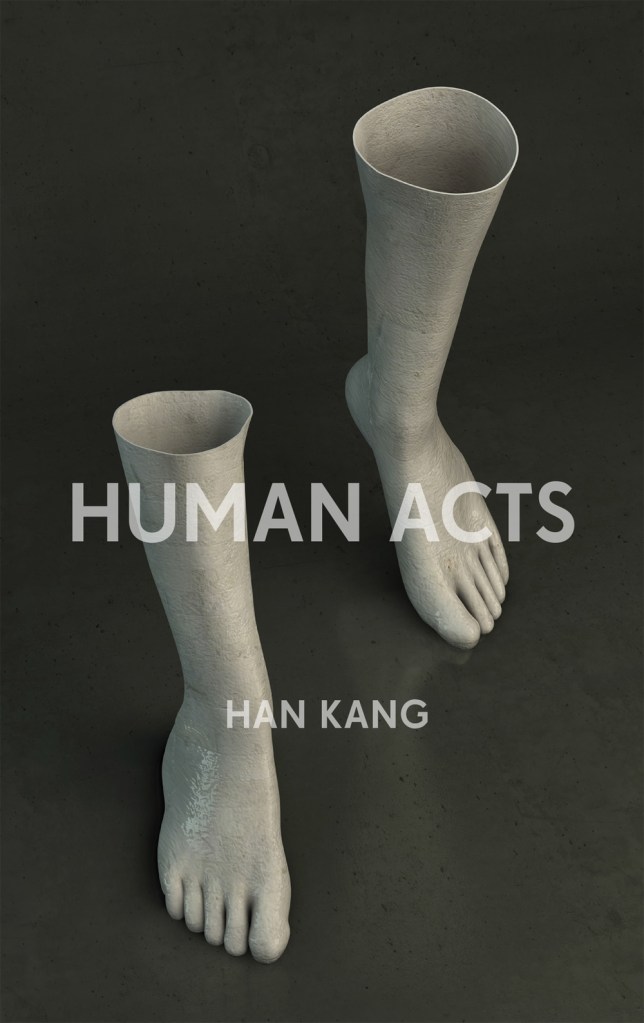
We Do Not Part begins at the hospital bed when two friends are talking and one of them discloses she will be having surgery and is unwell. The hospitalized friend asks the other to return to her village and tend to her bird that will die if it doesn’t receive food and water in three days or less. It is the death of winter and snow is constant during the story and it creates an impediment for one of the friends to reach the bird in time. Collaged into this are images of graves— unmarked or have become buried and waiting to be washed out to sea. Dating back to WW1 so many South Korean people died that focusing on just one of them is impossible, and so Han Kang turns her reader’s concern and compassion toward a small bird with a large presence in the story.
The friend who is returning to the village encounters cold, frostbite, injury, starvation, and is struggling with a mysterious illness while making her way toward this little bird. Further collaged into the white, bleak and treacherous landscape are microscopically closeup images of snow—beautiful and dangerous— and all the while covering up human lives and bodies belonging to people who lived in South Korea during previous wars and uprisings. So many families were separated. So many women, elderly, and children were encamped and murdered. The world outside South Korea, did not intervene and did little two nothing to help this fledgling Democracy and innocent people.
I won’t tell you if the bird gets rescued, but I will tell you there are a lot of ghost-like presences in the story which points to the title of this work. We may be in the present, but the past is always with us and it is our responsibility to honor and remember the past for reasons yesterday and today. We Do Not Part brings elements from every book written by Han Kang that came before We Do Not Part. You will have to read her other books to see this comes to full fruition. It’s oddly interesting how transparent this author is in referencing her prior works. It’s almost like reading an alternative history or walking through a gallery exhibition.
So what’s a good way to experience Han Kang? IN ORDER AND IN ENTIRETY! Actually I am exaggerating. Follow below because the featured book We Do Not Part (2021) was published in Korea before Greek Lessons (2023) but was translated and released in the United States afterward.
A word to the wise, there’s nothing Light or escapist about the works created by author Han Kang. There’s a reason why she is the Nobel laureate, and that is because she bravely states the unspoken and turns it into powerful art and narrative that becomes burned into a reader’s heart and brain. This author reminds us of our finitude and the fragility that comes along with being human be it as an individual or an entire society. Han Kang shows readers how history can be white-washed or destroyed, so that the present doesn’t make sense. Further, Kang demonstrates to readers how doing so causes confusion and determines an unclear future not possible from the eliminated and manipulated vantage of history in the making. In other words, Kang challenges readers to discern how dictatorship, fascism, and patriarchy paint indelible pictures in ghost ink. Wouldn’t you give a brilliant author who accomplishes this task and very short page count a look?
 Bookisshh