
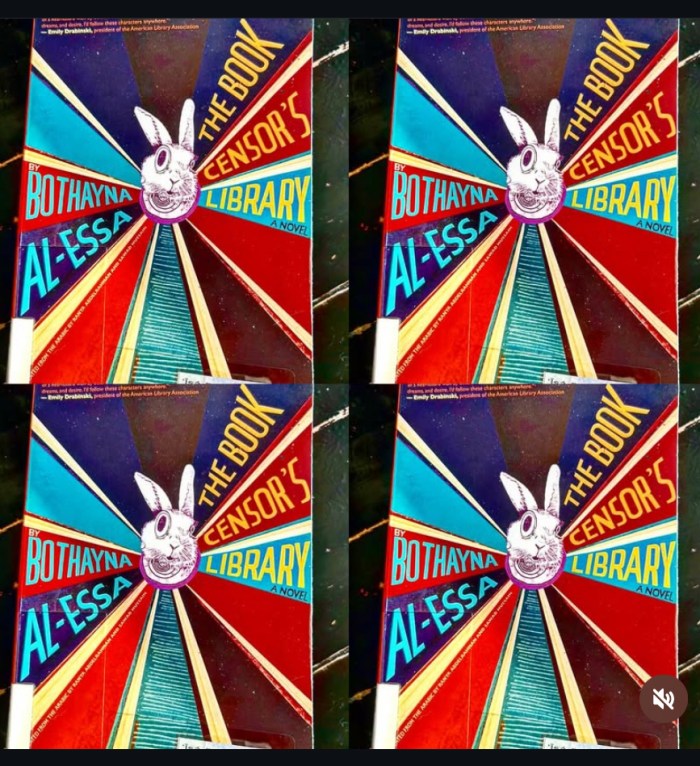
I cannot resist a book title or cover that features a rabbit. I cannot resist a book featuring a rabbit on the heels of Spring. I haven’t read a lot of books that feature libraries, but the few that I have read, I have found enjoyable. This issue of Bookish explores The Book Censor’s Library by Bothayna Al-Essa which is translated from Arabic to English and was brought to my attention by the annual Tournament of Books for which I was once a judge.
If you were ever in a position to rescue a written work of fiction or non-fiction and prevent it from being censored, banned or destroyed what book would that be? Can you imagine performing the role of Book Censor? What criteria might you employ in determining a work of writing as being dangerous to individual or society? Is it the works of writing that are dangerous or the individuals and societies that determine purpose and value for engaging such works? These are difficult propositions and in The Book Censor’s Library Bothayna Al-Essa aims to dramatize and engage readers with these kinds of decisions or enforcements in this case that are imposed by political and ultra conservative machinations.
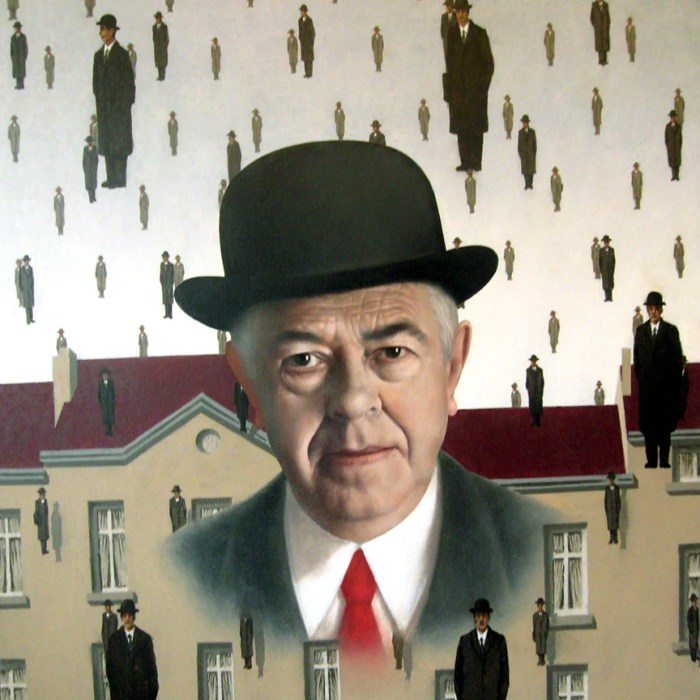
In The Book Censor’s Libary what does a Book Censor do exactly? A Censor’s job is to protect the reader from going below the surface of words. A Censor looks for words or phrases that offend, transgress, blaspheme and are considered taboo and cannot be broached. A Censor’s responsibility is to disable people from the possibility of falling into the dark abyss of interpretation. They use a manual for correct reading. Singular meaning is emphasized for words. Words that are regarded as taboo include: God, government, and sex. Subjects not to be addressed include philosophy, semiotics, linguistics, hermeneutics, sociology and politics. Books that mention astrology and zodiac are considered sorcery and anything that expresses magic is banned. There are different handbooks for other types of reading, particularly non-fiction and they are deeply coded and detailed with the distinct mission of destroying innovation, analysis, interpretation, translation, and challenging the new order. Those processes are removed from any possibility of inspiring or educating people on how to impact, change or redirect, a field of study or their world at large.
I’m taking back the word, “Meta” because it doesn’t belong to Mark Zuckerberg. I’m taking back the word Meta and applying it to this novel because it steps back and views itself in a variety of ways and times. More specifically, The Book Censor’s Library invites other works into the story as ones to be banned and burned. Most notably is Zorba the Greek because the main character Zorba lives passionately, impulsively and by his own rules and not those of society. Zorba is a threat to the new order and sociopolitical movement that conservatives are working towards. Other books banned (and I’ll leave it to you to read to find out why) are: Alice’s Adventures in Wonderland, 1984, and Pinocchio. Each of these works become portals for the reader to discover the consequences of not having them in one’s life and being able to imagine an extrapolate from their themes and lessons. This author invites readers to be metacognitive to stand back and witness self, their society and themselves again in response to captured ideas as they existed in time. History allows us to do this and history is at risk in this book. Although there are some clumsy steps in layering all of this together, the fast pace of this story more than makes up for narrative jagged edges.
So what’s up with the bunnies? This is answerable on so many levels. The Book Censor’s Library is densely populated with white rabbits. To the naked eye it appears the bunnies have no purpose. I assure you that the bunnies do. They provide a tension when people are working and trying to control information and influence in society because the bunnies are distracting. To the reader the bunnies are a reminder of betrayed innocence, fleeting time, the denial of fertility and abundance, and the subterranean world of the mind where ideas are born. This book is about regime and structural change in societies and it begins at the library which serves as an archive for its local humanity and contains the multitudes of the eras. Interesting to note that the author is also an independent bookstore owner in a society that doesn’t have bookstores on every corner or every community. The author understands the privilege contained within books and the dangers of scarcity of books and information. The Book Censor’s Library is definitely worth your time even if it wasn’t a winner or bracket jumper on this year‘s Tournament of Books. It’s a reminder to sit down, read, discover,covet, and cherish books while being with the world and yourself. Enjoy!
 Bookisshh