
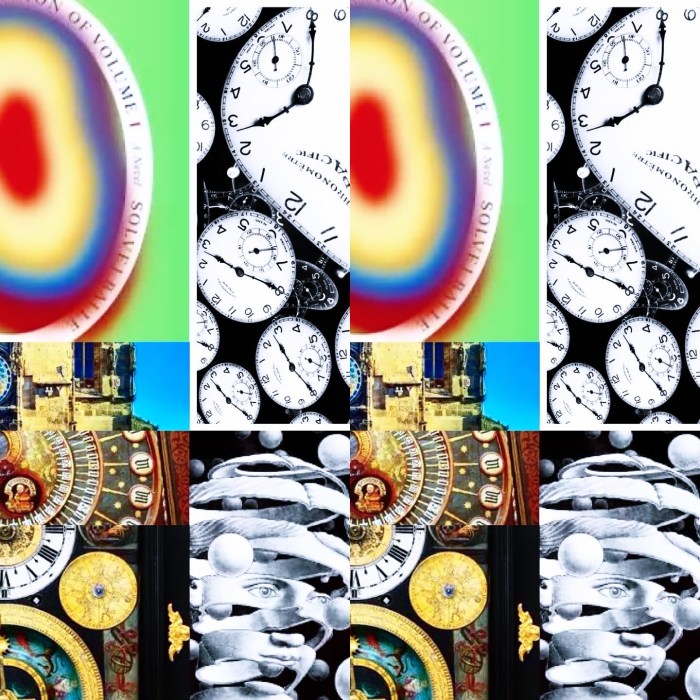
I was so excited to discover this book and then became completely deflated when I further discovered that it’s seven volumes long. On The Calculation Of Volume by Solvej Balle is a book I chose because I wanted to be a part ofthe crowd who read along with literary prize lists. I enjoy being in agreement with the judges or the masses, however it’s time for me to reconsider this practice. I can no longer deny my passion for reading and the time constraints imposed on my reading by a list-makers. In this issue of Bookisshh I discuss, On The Calculation of Volume, the first of a seven book series that I likely will never complete. Read on and maybe you’ll find yourself reading all of them and if you do, please let me know. Enjoy!
As as the first book in a series, this first book is quite tranquil. One woman keeps waking up and it’s November 18th. Her name is Tara Selter and she is married to Thomas and they are antique book collectors and sellers. They live in France just a train ride from Paris. Tara is the narrator of this story and she discovers and rediscovers details from the same day after living it over and over again while trying to escape the banal November 18th. Every day Tara explores how she can redirect her thoughts and behaviors to discover the greater minutia that is easily taken for granted during one’s day. Tara wishes to undermine time by examining al the bits contained within a series of interlocked moments as Tara attempts to move time forward. Tara’s inquiry generates a chaotic evolving process— similar to someone trying to solve a complex murder mystery – – notes pictures, red strings, connecting things it’s crazy.
Balle employs a simple premise really and this causes the writing to be very sensory driven; readers might say that the experience of the opening chapters is like watching an ASMR video. There’s so much auditory and visual detail that every observation is potentially a rabbit hole for one to get lost in. For example, there’s a sequence of sounds that occur every morning that establishes the pattern of Tara and Thomas’s day. Feet on the old wooden cottage creaky stairs, water filling tea kettles, tea kettles whistling, packages, being wrapped in brown paper, feet sliding into shoes, breakfast dishes clinking while deposited into the sink, a rain – soaked heavy jacket being shaken out and struggled into, a creaky old door opening and closing, old glass rattling in window panes, and boot covered feet crunching on the damp leaf covered earth while walking away from home. You get the gist there’s a lot of listening. And with the listening thoughts are being built about the underlying conflict: time simply isn’t moving on.
Tara’s day is on the perfunctory side. Not much happens but everything happens because everything is contained in time and time is contained in history. This book is almost like an arithmetic experience. You know how you learned that a whole number can become a fraction? Numbers begin as whole. Numbers get smaller and smaller. Numbers become integers and exponents. This is what happens with time, time and space, history. It’s all very contemplative and sometimes feels like navel gazing time, space, and history while I’m reading. The smallest event that happens becomes large and yet large events don’t take place. Not much changes but change happens and isolation increases. It’s beautiful and yet depressing.
Now that I’ve told you the effect of this book, I can only say that when I got to the end (if an end is possible on a day that repeats itself over and over again that is) I discovered that I wanted my life back. I felt like I gave so much concentration and time to this very little book and I’m really unwilling to do it six more times after it. In fact, what’s up with the series writing? So many authors are writing series today and then having them adapted for streaming. Series works are translated into binge watched programming. I find binge watching is depressing and I cannot be trapped in a construct for that long.
Finally, on prize lists— I don’t think it’s fair that the first in a series of books has made the short list for winner on the International Booker prize. Furthermore, I don’t think it’s OK that a short story collection is up against literary fiction and series works either. I guess you could say that I’m an apples and oranges kind of person and not much into hybridized fruits when it comes to comparisons and prize lists. When long and short lists come out in the literary world there are more eyeballs and readers who are planning purchases both for summer reading and upcoming holiday books on the fall horizon.
Sales and marketing is becoming way too important to the stories authors are crafting and formatting they employ. Authors are crafting works as publishers, agents, and marketers are responding to adaptation trends rather than telling a purposeful story. Why write seven books when you could write one or three? What is Solvej Balle trying to accomplish? Perhaps she is trying to promote concentration, connection as well as community, but for this reader it’s just too much. I’m a patient reader, but I’m also a mood reader and a reader who has seasons. Therefore, I’m tapping out in my calculation of the volume of time, energy and expense that it would take me to complete On The Calculation Of Volume. Book one was interesting and at times delightful and gorgeous but highly fatiguing.
 Bookisshh