

Housing is a complex social problem that is not easily solved. Every solution never works for all people and every solution brings with it a unique set of problems. Cities where employment is concentrated become congested, polluted and dangerous as jobs at all levels go away and poverty and inequality rises. Urban sprawl and suburban development bring traffic, socioeconomic and racial segregation and foster excessive conservative values commonly resulting in sociopolitical polarization. Outside major cities collar counties and rural communities are less densely populated and therefore offer fewer resources, food desserts, less jobs and a car to get from here to there. No matter where one lives during economic crises problems occur and society collapses. It’s a wonder that each generation expands and replicates all of this until one day it becomes unsustainable that people bottom out and become un-housed. Now add to this the unique problems of the 21st century—constant over exposure to social media, extreme wealth inequality, consolidation of media and information structures, a corrupt and grifting central government aimed at destroying democracy, socio-political polarization, an affordability crisis, a simultaneous variety of culture wars, and you are onboarded, prepped to read and enjoy, Dwelling by Emily Hunt Kivel, Farrar, Strauss and Giroux, August 5, 2025.
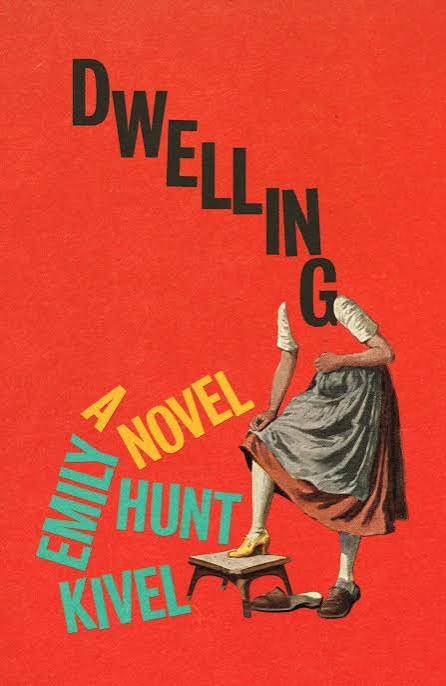
I’m LOVING DEBUT AUTHORS!! Emily Hunt Kivel is a debut author who was born and raised in California. Her bio states, —Kivel was born in a town famous for murderers and egg production and is the arm wrestling capital of the world. “What kind of novel would a writer nurtured within such unique social circumstances produce” you may ask? One whose freshman novel uproots a young woman with little-to-no family from her New York City bodega basement apartment to a small town in Texas where she resides in a boot/former-shoe-repair-shop, also a former pub or factory according to her first novel Dwelling. How does Kivel accomplish this urban/suburban dystopian coming-of-age you might wonder? By blending a housing crisis, a surrealist fairytale, magical realism and a come-to-Jesus with the self (no holy ghosts whatsoever). Dwelling is refreshing, emotionally penetrating and oddly delightful and I am thrilled to watch Kivel unearth and refashion the spitfire, rates of change during her eras of life will contain with her unique artistic vision and dark comedic voice. Will Emily Hunt Kivel activate the right archetypes and slow time enough for the future to become unworthy of its promise. Possibly…
So what’s Dwelling about? It’s about that moment when property owners and renters break their contractual relationship because tourism brings greater revenue to cities of all scale. Much more than struggling tenants do anyway… The mayor of New York City has dealt with the devil when he trades a old-timey economic system for municipal fiscal capture. Tourism Gentrification shifts a city’s housing market to serve travelers aka short-term rentals which drives up local costs and tax revenues. The wealthy continue to own and earn on their unoccupied real estate and rent controls disintegrate. Simply stated— people spend more money when they travel to and explore cities than when they live there. At the municipal political level Clientelism replaces citizenry and constituency and people disappear into tax brackets and the wealthy, revenue-generating clients are prioritized. A Growth Coalition, an alliance between city politicians and local business elites like developers, business, hotel elites and landlords prioritize economic expansion over community needs.Tenants are given notice and are kicked out. Where do the un-housed tenants go? Anywhere that they can and sometimes even a shoe—like the old woman in the nursery rhyme with her too many children did… You really need nursery rhyme or fairytale to help readers excavate their social panic button and chef’s kiss to Emily Hunt Kivel for crafting one to help the derailed thinkers out there get on board humanity’s ethics train and ride for their lives.

Kivel opens Dwelling when an authentic Greenwich Village parentless nepo baby, Evie, must leave her place of origin due to a massive gentrification going on in New York City. Her parents died at an early age in Evie’s life leaving her and her sister Elena to finish the business of growing up to themselves. Evie figures out a career in publishing and Elena is institutionalized and is sent to upstate New York due to a nervous breakdown and/or a schizophrenia diagnosis. Evie decides to head to Texas where she has a distant cousin to ask for help or couch surf. This all sounds pretty normal but the speed at which tenants are kicked out of NYC is especially bizarre when readers bear witness to pets are being rescued via helicopter landing on rooftop pickup spots and transported to animal rescue sites in rural states. When animals are harnessed, Kivel unleashes her brand of organic, meta-modernist surrealism into her story of leaving home to find yourself. Once Evie makes it to Texas, housing becomes less dense, vertical and more sprawling and spider-like with the constant additions to rural Texan suburban ranch homes.
Evie’s cousin Terry, a realtor wants to help Evie establish residency and they explore the slim picking leftover properties within Texan suburbia. While Evie crashes at her cousin Terry’s home she befriends her cousin Andrew and they visit what seems like an ordinary lake called Lake Unknown where at the bottom resides a huge fish whose singular movement causes ripples in the entire lake. More magical vibes occur as they witness this miracle of nature… The fish of Unknown Lake reveals one’s soul if one is lucky enough to gaze encounter, gaze upon and reflect. Moments like this are magical and transformative and void enough of specific detail which enables a reader to flow into a moment and just absorb experience. Kivel encourages her readers to be unknowing, experiential and uniquely human. Spaces are vague in Kivel’s description but these spaces have a transformative impact on characters as they make their way through growth and survival on their individual quests. It’s never easy for Evie and other minor characters and they are tested and challenged to varying degree at every turn. But that’s life when one is individuating and self-defining without helicopter parents, corporate structures and even Poly Marketing one’s life quest with Chat GPT or Google AI cosplaying as Search… Eventually Evie settles on a new home In a town called Guluck, Texas, that she can afford—a building that is shaped like an old cowboy boot. She signs the line and begins her new life as a typeface graphic designer with no job on a mission to find a key that will unlock everything Evie needs to feel secure in life—which for now is her institutionalized sister Elena, the contents of her NYC basement bodega apartment and her future career.

As Evie explores the area she encounters quirky local people.The people who populate Guluck in Dwelling seem like small-town unassuming folk but everyone has something mysterious about them that only living together and knowing one another can reveal… One of those people is Bertie—a key-maker who can make any key to unlock any lock as long as it’s either described by imagination or specific memory. Bertie can even manufacture the key to unlocking Evie’s childhood. Neighbors begin to appear and knock on Evie’s door wanting shoe repair services. Tired of turning people away and needing a job, Evie enrolls in a basic shoe-making job at a junior college. This ultimately connects Evie to a magical, secret society of shoe makers. Parties, missions and journeys ensue.
A technique Kivel employs that grant a distinct meta-ness to Dwelling is the use of the frame or embedded story. A frame story is a literary technique where an introductory main character sets the stage for one or more shorter, embedded stories within it. In Dwelling the stories embedded are of magical historic shoemakers, evil greedy kings a shoeless child with powerful shoemaking skills but only for the right wearer. A big fat dramatic fairytale right there in the middle of this larger story. It all points to Evie and Dwelling enables readers to time travel and witness the excesses and vanity of past society—history always repeats itself in some fashion (pun intended) but Evie will discover that she is somehow endowed with shoemaking gifts. As you read this you might think that the mashup of real estate dystopia, fairytale as cautionary tale, magical realism and psychiatric wellness institutions won’t work. Let me tell you, they do!
Did I say “psychiatric wellness institutions”? I sure did but before readers can go with Evie and othersto rescue her sister Elena, they must put on magical footwear and traverse a magical forest in Colorado. Elena’s institution, Yatra, has moved there (no more mental health hospitals allowed in NYC during this era of gentrification. Elena is “resting” and being reprogrammed for some cultish endgame, but that’s another story… Does Evie get to her sister in time? Does she become a shoemaker? Does she reclaim the contents from her basement bodega apartment and make her life whole again? Can she? Can we when we are unhoused and unemployed and unsupported by family? Read Dwelling and see how Emily Hunt Kivel answers these questions.

