
A passive form of entertainment that I enjoy is watching algorithms snake around digital media and dish out content creators and aggregators who fashion collections of books that become viral trends. What does a sample session look like? Reading people show up in their curated spaces—in front of jam-packed book-nooks while pouring coffee from mini French presses pulling books from a stack; sometimes readers perch upon the edges of their beds with eclectic portrait galleries in the background and mood lighting while holding up titles; or sometimes a reader will sit behind a professorial desk with a power chair, expensive accessories, stacks of hot new releases and heavy duty classics demonstrating quiet snobbery as they prattle on about a stellar selection. These readers come from every identity, age, income level and hail from around the globe. These readers have shopped their stacks for works to hold up to you, encourage and influence you to purchase and hopefully read. These readers have gone to great lengths—begged, borrowed and bought these skinny little books of all genres. These readers have synopsized, rehearsed and recorded recommendations and/or reviews to incite you to get reading. In this issue of Bookisshh it’s “on-trend” to refer to these books as “WLBs” (weird little books) but they’re also Novellas. All or most of these books are 250 pages or less. They can be read quickly if you have either strong reading fluency, pace, and/or time management (which improves with regular reading BTW).

So what did I select for the WLB trend? I chose an author over a specific genre because I figured a writer who publishes several WLBs will be skilled at their craft in delivering a concise, clever tale no matter which style novella that they publish. This WLB project also afforded me a micro author study as well as reading translated works which I adore.I relish a power task for sure..
So which author did I choose? Olga Ravn, a Danish poet and novelist. Ravn is entirely both of these things because though her works are brief they are deeply and specifically immersive and philosophical which is a hard task to accomplish and her prose delivers an enriching use of your brain space and time.
Some of the awards and nominations that pepper Ravn’s CV include, the International Booker Prize, Ursula K. Le Guin Prize, the International Dublin Literary Award and the National Book Award. Ravn is a writing instructor at Testrup Hojskole, a literary critic for Politiken, and an editor at Gyldendal. Producing novella length works is a most efficient decision given the variety of writing Ravn produces and other professional roles which she performs. Ravn is really gaming the attention economy with no data grabs as she captivates and captures her reader’s time and attention.
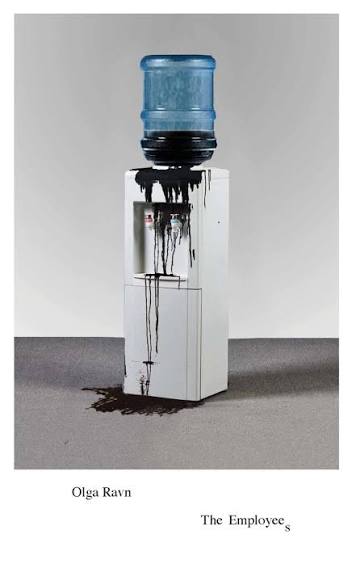
So which did I choose? I chose 2 of Ravn’s books, The Employees and The Wax Child. Both of these weird little books are under 200 pages, structurally very loose and stylistically specific. While both are fiction, one is Speculative fiction and the other is Historical fiction and both are good moody Fall reads.
Olga Ravn and her weird little books work perfectly for me especially because I am a huge stranger to Speculative fiction and don’t read a ton of Historical fiction. Let’s discover these WLBs in greater detail shall we?
The Employees, 2023, New Directions Publishing translated by, Martin Aitken, was originally published in Danish in 2018. The subtitle dropped from all the covers that I have observed is: A Workplace Novel of the 22nd Century. From the vantage point proposed in The Employees during the 22nd century it’s pretty bleak and tragic.
Before any further discussion I want to share what Speculative fiction is. Speculative fiction is the umbrella term for a narrative that departs from consensus reality. It covers science fiction, fantasy, horror, alternate history, dystopia/utopia, and anything that asks, “what if the world worked differently?” Speculative fiction changes a variable—technology, physics, history, biology, society, psychology etc. and then follows the consequences. I won’t go through the greater historical and analytical explanations here. Let’s leave that for your further curiousity, but suffice to say: you now know what processing muscles to flex when reading The Employees.
The format employed in The Employees is comprised of over one hundred different witness interview statements. These statements are merely numbered and very few names and/or identifying characteristics are directly stated, but these short dense statements offer enough information for inferences to be activated. The writing is often contradictory. The details are vague and limited, yet a reader can expect to discover power roles and peculiar inter-group dynamics. The setting is sterile and yet vibes exist. The reader ends up building the story, and as they read understands what’s happening and is further able to suss out what might happen in a plot sense. A reader might think, “I’m unclear as to what is actually happening; is it me or is it this book?” A reader might count pages to the next chapter or how many before this WLB will end… A reader can abort the mission or let go, ride out the pages, and hope to walk away with something conclusive. You will… Speculative Fiction gives a reader no choice but to accept and question a unique possibility. Speculative fiction may or may not deliver physical consequences or a new possibilities for further contemplation. This is the time/cost/opportunity mind-juggle all readers contend with when picking up a book. It’s a Weird Little Book and the author has minimized all of these risks and has given you your dedicated concentration back. You’re welcome.
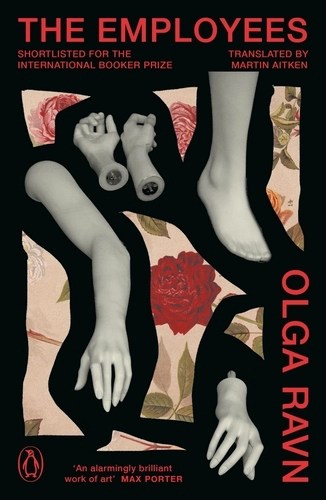
In short, there’s a space ship, a huge one called, The 6000 Ship. On board are both humans and humanoids that err on the side of being constructed predominantly out of human biological matter. The 6000 Ship occupants live and/or coexist (depending on who is giving an interview statement) together. The mission is data collection except none of them realize that they are the data being collected. Factions form, friction occurs, nostalgic longing evolves to deep depression among the human crew members. HQ issues decisive actions regarding the crew’s continued lives, deaths, termination, destruction and rebooting are considered and issued both at the HQ as well as on the 6000 Ship. **Plan about 60-70 pages before the format is in full force so buckle in and unbuckle because reading The Employees is a gravity defying experience and the center is hard to find and hold.
What’s at stake in The Employees? The continued control of humanity by humans. Or the possibility or quality of harmonic coexistence between AI-driven robots and humans. Ravn raises the question, what it means to be an organic, thinking AND feeling being and what’s lost when we leave it behind for artifice, efficiency and extra-sensory optimization?s For what? For who? What’s the cost to live in a world without love, connection, a spectrum of feelings and pleasures. What’s left when all that is extracted and diminished? Read The Employees and find out.
“A book holds words. Words hold things. They bear meanings. A novel is a medicine bundle, holding things in a particular, powerful relation to one another and us.” —Ursula K. Le Guin, “The Carrier Bag Theory of Fiction”
So what’s the other WLB by Olga Ravn that you read and how is it similar and profoundly different you ask?
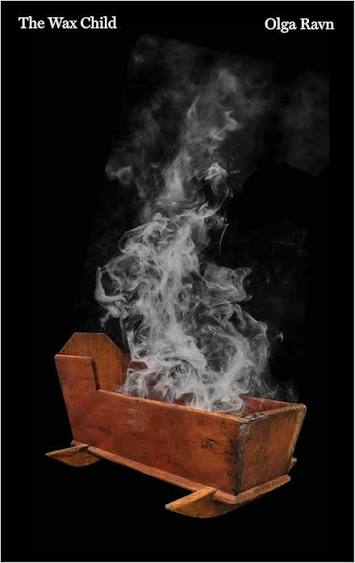
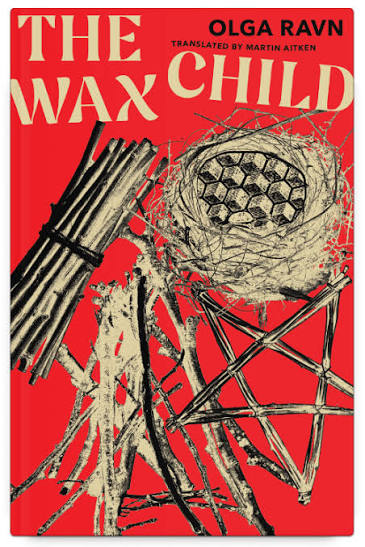
The WLB that I read is, The Wax Child, by Olga Ravn, Translated by Marvin Aitken,New Directions Publishing, 2025.
Does this cover trigger you? It definitely disturbs me, but my role as a reviewer is to look at what a work is trying to accomplish and put my fears and feels aside which is not always easy. So I did what served me best: 2 false starts, only during the daytime, then finally I took the book jacket off and read it over 3 days and 50% of the time was spent outdoors. I was scared while reading this creepy WLB.
IThe Wax Doll was nominated for the International Booker Longlist and shortlisted for the National Book Critics Circle Award in Translation. This book is just under 200 pages standing firm at 192 pages. An elevator pitch about this book might sound like: a historical novel about 17th Century Witch Trials in Denmark, narrated from the perspective of a wax doll.
Did you know that ZERO people were burned at the stake during the Salem Witch Trials in the United States? It’s a common myth in America but this form of punishment was used in Europe. The colonial American persecutions employed hangings, pressings, and jail deaths during the late 1600s. In Denmark, where this story unfolds, their accused witches were burned or beheaded and never offered forgiveness or achieved survival. In view of this information, please note that you will encounter brief descriptions of burning and beheading in The Wax Child.
Ravn includes extensive historical research on her subject and characters in writing The Wax Child. The author unearths letters, trial documents, diaries, and translated passages borrowed from grimoires which were actual spell books filled with cures, curses and talismans. You can see why a Weird Little Book might add some mystical creepy fun to Fall, but it made me sad because it was based on fact and artifact requiring a reader to be powerless in positions as judge, juror and witness. I was relieved that The Wax Child is brief—I’m a stranger to religious themed books or books that are replete with gore, the supernatural, or induce fear. Though I made it through this WLB, I will never look at candle wax the same nor will I leave a single hair on a hairbrush again…
If you haven’t traveled to Denmark you might not heard of Jutland let alone Northern Jutland where this story of childless, unmarried or miserably married women labor at life and are near coven-like as they card yarn, launder soiled clothing, prepare grain and can food. They cope with the near enslavement that marriage of 1600s Denmark demanded noble or not by maintaining close circles, rituals for expressing stress and fluid shared affection.
A noble woman, Christenze Krukow is childless and unmarried. She wishes to remain wild and free and though she’s noble spinsterhood did not guarantee land ownership or power. To fill her hearth and home Christenze melts beeswax and fashions a small forearm sized human figure aka the wax doll and child she desires to bring into her world and who is very intentionally designed. She carries this unnamed doll under her arm for 40 weeks. The doll cannot speak or hear in a human aspect, but the Wax Doll retains an extrasensory perception that allows it to travel where there are perceived threats to the social order. The Wax Doll can travel into the ink of a king’s pen and thoughts while he’s composing an inquiry regarding witchcraft activity in the hinterlands of his realm. The Wax Doll can penetrate the private bedroom of a mother whose baby did not thrive, as she’s having an emotional breakdown and looking for human misdoings in the ending her baby’s life. The Wax Doll whispers to readers what’s happening during the story using a sort of telepathy.The Wax Doll tells Ravn’s readers and some of the characters what’s happening, what will come, what others think and how they feel. She is omniscient and omnipotent. One day the Wax Doll is unearthed and handed off to a young girl for protection but remains emotionally connected to Christenze and awaits her summons by Christenze or her or her mother’s death.
Ravn takes her readers into the marriages and homes of various women. They work so hard, they get so little and have very little power or agency in their own lives. They find joy in song, dance, revelry and maybe some queerness—it’s very subtle but present among a few key characters. Men and women are less emotional with one another it’s not a tender time during the mid 1600s Denmark.
Religion and patriarchy are the strict social structures and enforcements and as one might expect women seen experiencing pleasure—laughter, expression, or ecstasy that aren’ shared with or provided by men are considered possessed or evil. Women who challenge, subvert or reject these structures and are witnessed doing so become targets of men or women who are looking for scapegoats to blame for all kinds of unexplainable social ails.
The characters in The Wax Child are blamed, accused, tortured and tested. What remains are their convictions, commitments, sisterhood and secreted freedom even upon death, It was pretty awful and thankfully quick like a candle snuffed out with insistence. That’s what life became for a handful of women in Denmark during the mid 1600s.
It’s a great trick that Ravn plays with her reader’s attention—she keeps her books short, sensory-driven, mysterious, quietly political, ethics challenging, thoughtfully researched and keenly factual. Olga Ravn lathers your brain into concentration then leaves you thinking, feeling and wondering. That’s what a WLB—Weird Little Book accomplishes.
Will I read Olga Ravn again? Maybe. I’ll have to be in the mood for wandering in sadness and melancholy. Will I read another WLB? Yes, it’s satisfying after a big book—a palate cleanser so to speak. Plus WLBs come in all shapes and genres which is a great way to expand your genre preferences and/or exposure. Enjoy!

