
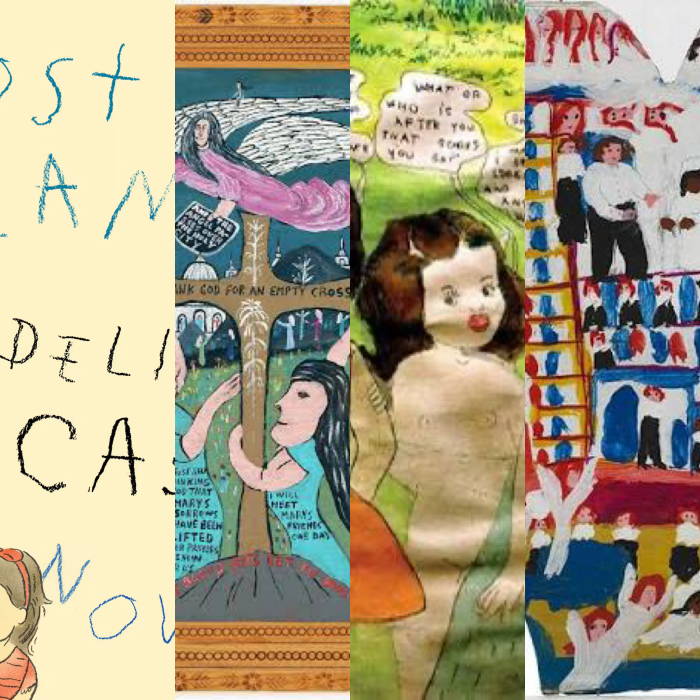
I’m really getting a kick out of this year’s debut authors. They are producing entirely readable works that mash up genres and interrogate some of the most critical issues of our time right now as they bleed and sparkle at their very centers. Lost Lambs by Madeline Cash is just one of these slow simmering eruptive literary volcanoes that sends families, small communities, a local church, shipping magnate and a longevity cult into a tornado of a tale. In this issue of Bookisshh we’ll explore a fantastic, award nominated debut work of literary fiction and obsess over the question: Can a family really be this messy? Put on your hazmat suit and let’s explore shall we?
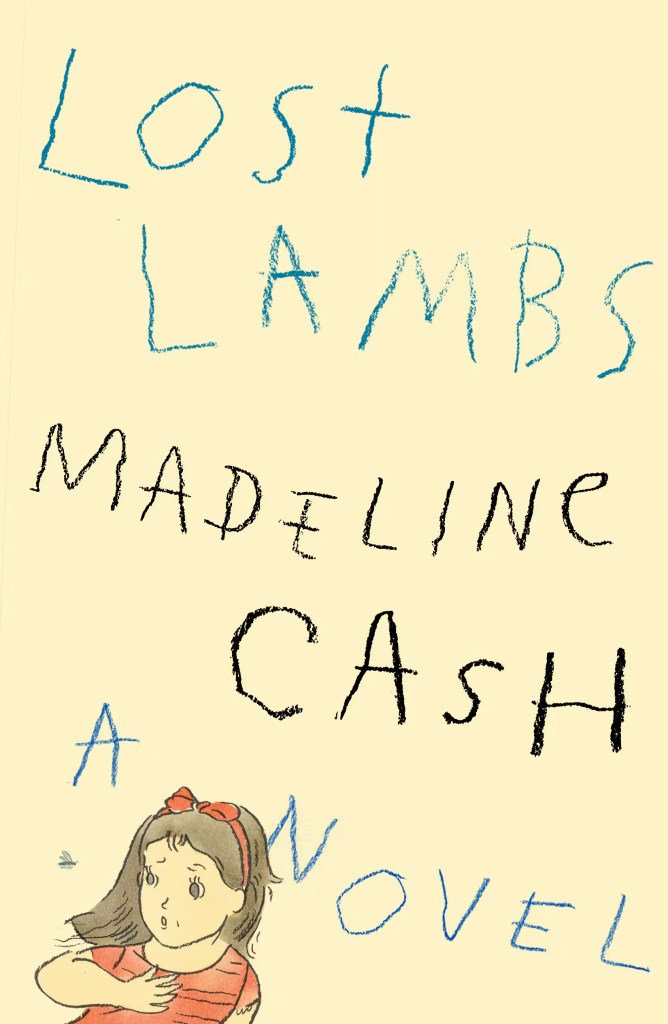
Lost Lambs, by Madeline Cash, 2026, Farrar, Strauss and Giroux, Fiction is the debut novel for Cash who at 30 years of age straddles the Millennial and GenZ cusp. Maybe that’s why I liked this little book of hers—I too am a tweener between eras and also have a long telescope of politics, pop culture and sociocultural change. Cash does a fine job crashing the lives separated by late stage capitalism in Lost Lambs. She spies into their church communities, secret shipyards and guarded estates and opens up the hearts and souls between family and community members. It’s all very real how Cash’s vignettes show readers how very broken society can be in small town coastal spaces. More on this later…
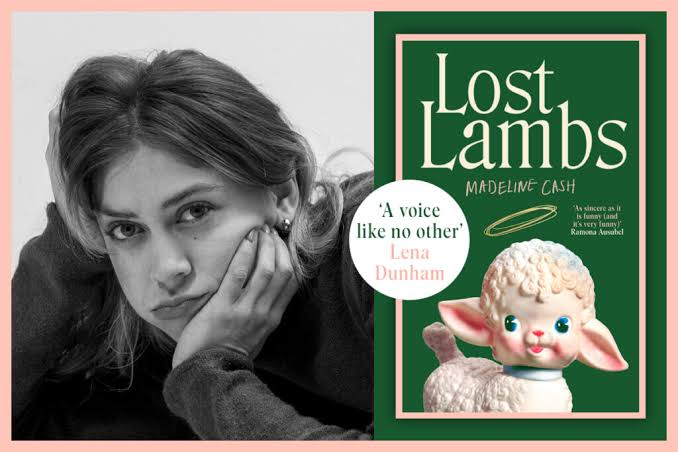
Who is Madeline Cash then? During her early evolution she was part of the “Sad Girl” literary scene and is a major figure in the indie internet era and Weird Girl literature scene that targets and resonates with GenZ readers. Cash’s fiction is widely recognized for capturing the digital landscape, anxieties, and Y2K internet aesthetic central to early GenZ girlhood. She uses GenZ-coded stick-and-pokes over Millennial style choices. Today at 30 years old Madeline Cash holds a Bachelor of Arts from Sarah Lawrence College. In 2020 Cash Co-founded Forever Magazine during the COVID-19 pandemic. Later, in 2023, she authored Earth Angel, a short story collection which won the PenCraft Fiction Award. Her stories have e appeared in The Baffler, The Drift, and Nylon. Today Cash continues to write fiction, and as co-founder, author and copywriter of the independent publication Forever Magazine. No amount of publication consolidation can keep Madeline Cash and her posse from taking to page, shaping a cultural lens and cranking out issues. Good for Cash and all of us who grew up in time’s tweener-villes.
Lost Lambs centers around 1 family, 1church and 1 shipping magnate and the auxiliary characters really bring texture and flavor to this tale of a messy family. Picture a small town somewhere on the West coast where ships dock, cargo is catalogued, unloaded and stored, and ships leave. An entire town has formed and expanded due to this shipping company. This where the Flynn family lives and struggles maintaining a sense of hearth and home. Bud/William (depending on his context) is the stale loaf breadwinner who does accounting for the local shipping company. He sleeps in the family van housed in the garage while his wife, a former and failed artist takes baths, smokes pot and obsesses over her skin rather than feeding her children and participating in their lives. She is Catherine and she is into polyamory (open Marriage). Bud and Catherine have 3 daughters: Abigail 17, Louise 15, and Harper 12. These girls demonstrate how absolutely lonely and empty their family life is and how challenging life is without a parental unit and or emotionally present mother. The 3 Flynn daughters each has a unique brand of tragicomedy and conflict. Their pursuits reminded me of the book or movie, The Virgin Suicides” with the exception of the controlling mother is turned inside out; there is no maternal control measures whatsoever; parenting is all up to Bud especially as he departs from his musician name Bud and grows up into William as he defends his daughter’s lives and finds true love. Cash interrogates love in Lost Lambs and shows readers how love changes as we do AND that sometimes love isn’t enough to build a life upon especially when people become toxic with one another and in Lost Lambs toxicity becomes tragicomedy and effective contemplative fodder for readers witnessing a messy family…
Lost Lambs opens with Harper Flynn,12, who is in the office of Father Andrew, the local Catholic school priest who is hosting the Inner Beauty Pageant (which is completely ironic you’ll discover if you’re compelled to pick this book up). Harper is intellectually very gifted and is also very naughty or norm-challenging. Harper is a core protagonist and uniquely positioned as youngest child, family detective and is also entirely unfiltered. After snooping in her father’s emails from she detects that criminal activity is taking place and conducts an investigation that sends all kinds of people in a tailspin and she ends up in a Christian conversion camp that will hopefully quiet down her impulsivity. The frank conversations between Harper, local adults and religious leaders is a romp as Harper wanders the wilds of adolescence and comes of age.
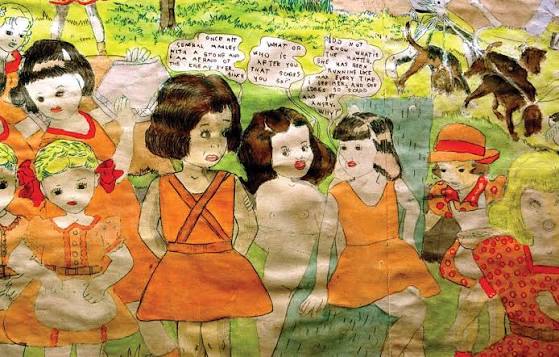
Flynn daughter, Louise, 15, struggles with a speech challenge—she stammers, and feels invisible sandwiched between her 2 powerful dynamic sisters. Louise is chronically online and spends all of her time in a treehouse alone with a computer while she messages with a terrorist who is trying to radicalize Louise into extremism. It’s working and Louise who knows little of love and struggles with identity plans to marry this internet lover, and blow up her community and become a martyr. Louise thinks she’s found a man who loves her and a life they can share but what she ends up with is house arrest, a record, and an ankle bracelet.
The great beauty of the Flynn family is Abigail, 17, and is the oldest daughter. Abigail is a teenager who has outgrown her small town so she experiments with drugs, and older men as escape routes. All of this leads Abigail into the home of a bad billionaire who is obsessed with longevity and Parabiosis which is when two living animals are surgically joined so they share a blood supply. While parabiosis seems unrelated to a story about a small town messy family in a church community it connects directly to a plot that serves as commentary on the dark precepts of being a billionaire their motives and impacts on those of lesser economic means—predator and prey so-to-speak… In other words this particular billionaire, Mr. Alabaster, is in a longevity cult that feeds off the blood of young women from Albania.
Cash interrogates everything in her quirky romp; open marriage, polyamory, crises of faith, radicalization, over sexualization, longevity obsession, billionaires, ancestral inheritances, human trafficking, cults, identity, absent mothers, and repressed creativity. Critics and reviewers compare Madeline Cash to Jonathan Franzen because no one owns the truth in a messy family and everyone’s truth is raw and hangs on the laundry line in the bright sun for all to see and ponder over. In terms of structure and style Cash engages in unique wordplay particularly in the consonant blend of letters, “GN”. Opening examples are densely positioned beginning with the word gnat and future keywords are purposely placed in words like: extermignate and dognate for exterminate and donate. Cash employs this technique throughout the narrative and it’s as if gnats are constantly flying around unconsciously in the text. Gross and funny. Quirky… The external third-person narration and snappy, snarky dialogue keep the plot paced and forward moving. Furthermore, Cash’s secondary and supportive characters are entirely colorful and/or strange in some instances, but they help the Flynn family members achieve breakthrough themselves and achieve actualization. Pleasant surprises abound in this community of characters from beginning til ending. Some of the straightest people are the most clinically odd. Plenty goes on behind closed doors in small coastal and/or Suburban communities and no one measures up to the optimistic ideals in places such as these.
All of the author’s cartoon-like character portraits come to life, they make you smile, wonder and concern yourself as they march under and over ground in armies of family (broken and all), church community (untraditional and all) and they march toward a hyperbolic cult ritual taking place in a billionaire’s mansion on a large and heavily surveilled private estate. A familiy’s individual and collective catharses are the last beat of the story when a spotlight shines on just how important and precious weathering a crisis and remaining a family really is… Realistic? Unsure. Necessary? Surely it is…

